
Overview
Infertility treatment encompasses a diverse range of medical, surgical, and technological interventions designed to help individuals and couples overcome reproductive challenges and achieve pregnancy. Depending on the underlying cause, initial strategies often begin with non-invasive approaches, including lifestyle modifications (such as diet and stress management) and fertility medications like clomiphene to stimulate ovulation. When structural barriers or blockages are present in the reproductive tract, surgical procedures may be utilized to restore natural anatomy. For more complex or unexplained cases, advanced Assisted Reproductive Technology (ART) becomes essential; this includes Intrauterine Insemination (IUI), which places concentrated sperm directly into the uterus, and In Vitro Fertilization (IVF) where eggs are retrieved, fertilized in a laboratory, and then transferred back to the womb.
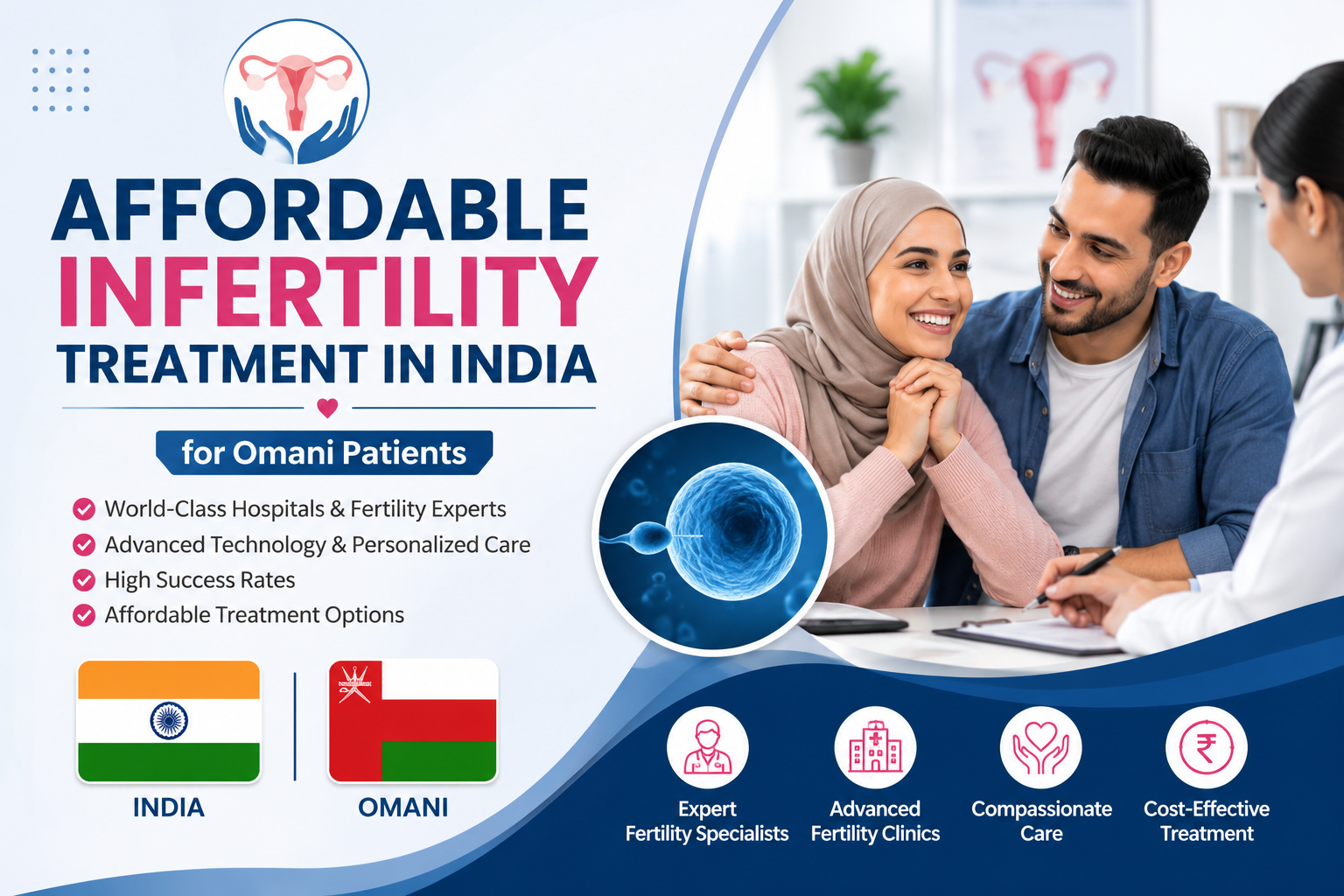
Infertility Treatment in India for Omani Patients in a paragraph and make a general content
India has emerged as a premier global destination for Omani patients seeking advanced infertility treatments, combining world-class clinical expertise with high cost-efficiency. Leading Indian fertility centers offer cutting-edge reproductive technologies—such as In Vitro Fertilization (IVF), Intracytoplasmic Sperm Injection (ICSI), and Preimplantation Genetic Testing (PGT)—delivered by highly experienced specialists at a fraction of the cost found in Western countries or private GCC facilities. To cater specifically to Middle Eastern families, many top-tier hospitals provide dedicated international patient desks that offer comprehensive assistance, including fast-track medical visa invitation letters, direct airport transfers, Arabic-speaking translators, and culturally sensitive amenities like halal catering and prayer spaces. With short flight times from Muscat and no lengthy waiting lists for procedures, Omani couples can access personalized, confidential, and compassionate reproductive care designed to make their journey to parenthood as smooth as possible.
Affordable Infertility Treatment in India for Omani Patients
India has become the leading global hub for Affordable Infertility Treatment in India for Omani patients, offering premium-tier reproductive healthcare at up to 60% to 80% lower costs than private clinics in the Gulf region, Europe, or the United States. While a standard cycle of In Vitro Fertilization (IVF) or Intracytoplasmic Sperm Injection (ICSI) can place an immense financial burden on families globally, top-tier Indian fertility networks provide world-class self-cycle IVF packages ranging between USD 3,000 and USD 5,000, which covers initial diagnostics, ovarian stimulation medications, egg retrieval, and embryo transfer. Omani couples benefit directly from highly transparent, all-inclusive medical tourism packages that eliminate hidden fees and offer zero-percent financing options. Furthermore, major Indian medical hubs like Delhi, Mumbai, and Bangalore maximize this cost efficiency by providing complimentary international concierge services—including Arabic-speaking translators, halal-certified food, and prayer accommodations—allowing couples from Muscat to undergo advanced treatments like Preimplantation Genetic Testing (PGT) in an affordable, stress-free environment.
Factors Affecting Infertility Treatment Cost in India for Omani Patients
The overall cost of infertility treatment in India for Omani patients is influenced by a combination of clinical medical variables, chosen laboratory technologies, and travel-related logistics. While India remains a highly economical option compared to private clinics in the Gulf, the final financial blueprint depends heavily on several distinct factors.
-
Maternal Age and Ovarian Reserve: The age of the female partner directly dictates egg quality and quantity. Women over 35 often require higher dosages of gonadotropins and advanced hormonal stimulation medications, which can significantly escalate the base package cost.
-
Number of Treatment Cycles: Fertility success is not always guaranteed on the first attempt. The need for multiple In Vitro Fertilization (IVF) cycles or multiple Frozen Embryo Transfers (FET) to achieve pregnancy remains the largest variable in total clinical expenditures.
-
Underlying Cause of Infertility: Complex conditions such as severe endometriosis, advanced Polycystic Ovary Syndrome (PCOS), or severe male-factor infertility require extensive diagnostic testing and specialized pre-treatment therapies, increasing upfront costs.
-
Advanced Sperm Selection Techniques: Standard fertilization protocols may be upgraded to Intracytoplasmic Sperm Injection (ICSI) or Physiologically Selected Intracytoplasmic Sperm Injection (PICSI) if low sperm count or poor motility is detected, adding to laboratory fees.
-
Preimplantation Genetic Testing (PGT): For couples seeking to screen embryos for chromosomal abnormalities or genetic disorders, PGT-A or PGT-M testing is utilized. This technical screening is billed per embryo and can increase overall expenses.
-
Cryopreservation and Storage: Freezing surplus embryos, eggs, or sperm (Cryopreservation) for future use incurs an initial freezing charge, alongside ongoing annual maintenance and storage fees.
-
Choice of City and Healthcare Facility: Premium hospital networks in tier-1 medical hubs like Mumbai, Delhi, and Bangalore have higher operational costs compared to specialized clinics in tier-2 cities.
Leading Infertility Specialists in India Trusted by Omani Patients
India’s leading infertility specialists have earned the deep trust of Omani patients through their exceptional clinical success rates, rigorous international training, and a deep-rooted understanding of Middle Eastern cultural values. These elite reproductive endocrinologists and embryologists typically hold advanced fellowships from prestigious institutions in the UK, USA, or Europe, allowing them to master cutting-edge protocols for complex cases like recurrent IVF failure, advanced maternal age, and severe male-factor infertility. Beyond their technical expertise, these specialists are highly preferred by families from Muscat due to their empathetic, highly confidential, and personalized approach to care, ensuring that every treatment plan aligns with religious and cultural preferences. Working alongside dedicated international patient teams, India’s top fertility experts seamlessly coordinate everything from remote pre-travel video consultations to post-treatment follow-ups back in Oman, providing a continuous and reassuring pathway to parenthood.
Best Hospitals for Infertility Treatment in India for Omani Patients
The best hospitals for infertility treatment in India trusted by Omani patients are state-of-the-art medical institutions that hold prestigious national and international accreditations, such as JCI and NABH, ensuring the highest global standards of safety and clinical excellence. These premier facilities feature ultra-modern, cleanroom embryology laboratories equipped with advanced technologies like time-lapse embryo monitoring, laser-assisted hatching, and high-resolution genetic screening platforms. To accommodate the thousands of families traveling from the Sultanate of Oman each year, these hospitals house dedicated, multi-lingual international patient departments that streamline the entire healthcare journey. This specialized support includes providing formal visa invitation letters, facilitat
ing direct airport transfers, coordinating care with Arabic-speaking interpreters, and offering culturally tailored amenities such as halal-certified culinary options and private prayer rooms, allowing Omani couples to undergo complex reproductive procedures in a highly confidential, comforting, and supportive environment.
Infertility Treatment Success Rates in India for Omani Patients
Infertility treatment success rates in India for Omani patients are among the highest globally, consistently ranging from 50% to 75% per embryo transfer cycle depending on the woman’s age, medical history, and the specific technology utilized. These exceptional outcomes are driven by the widespread use of advanced reproductive technologies—such as blastocyst culture, frozen embryo transfers (FET), and preimplantation genetic testing (PGT)—which maximize implantation chances even for couples facing complex or recurrent fertility challenges.
Conclusion
